

Sound Affects 4: The Power of Connection
Dentsu and Onic Present Wave Four of Sound Affects Research
Since 2019, Onic and dentsu have undertaken research projects every second year that delve into the value and changes of the audio landscape. This series is the Sound Affects Series, and 2025 marked the fourth addition, The Power of Connection.
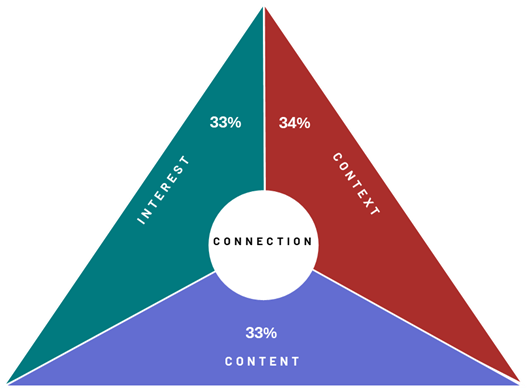
Media and communications continue to change shape, and over the years, we have explored the impact of digital media on audio, the changing shape of audio and the impact of AI on audio. This year, we saw increases in the levels of engagement in listening and designed and validated a model for connection that can help marketers use audio moments to build valuable relationships with consumers and customers. The new connection model shows how three pillars of engagement must be present to drive real connection: Content, Interest and Context.
The research showed that equal measures of these connection points must be present, but often more time and resource is invested in content with less consideration given to ensuring that the content is delivered to the right people in the right context.
The Sound Affects Connection Model
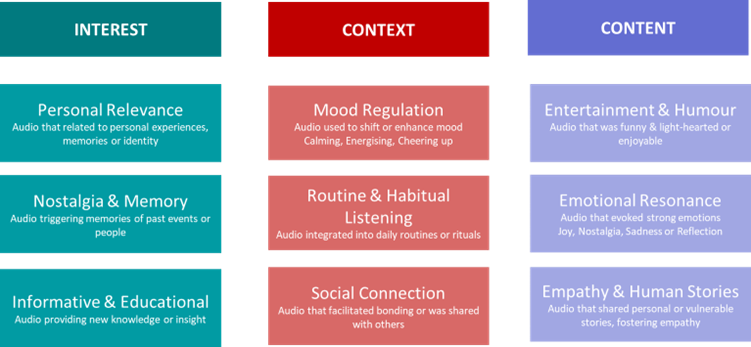
These three pillars were explored in a listening study and diary, providing further depth to what drives connection within these pillars. We saw that interest extends beyond simple relevance and that learning and nostalgia work to drive interest. From a contextual point of view, the need to place content in “like-minded” spaces is important, but mood moments and reasons for choosing the content must also be considered. The study showed that these moments change throughout the day with different triggers at different day parts. While entertainment and humour featured in drivers of content that connects, emotional resonance and particularly human storytelling were strong drivers of connection.
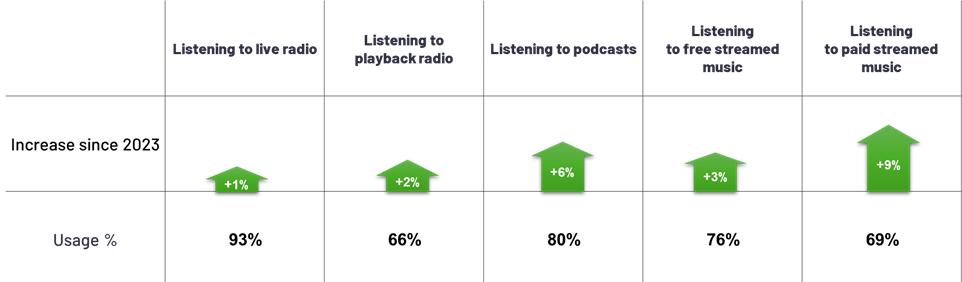
In addition to connection, we saw that audio continues to be a powerhouse within the broader media environment, making up 19% of Irish people’s media consumption. As audio continues to grow and evolve beyond FM radio, the expansion is resulting in more consumption, with each audio channel playing an important role.
In researching connection, it was important to understand not only what drove connection, but also the value. We found that 34% of people were likely to recommend or talk to someone about an ad that they felt connected to, 30% were personally attitudinally impacted, and 25% were more likely to purchase as a result of feeling connected.
Four clear listening themes emerged from the longitudinal study, first carried out for Sound Affects 1 in 2019:
1. Back to the Office
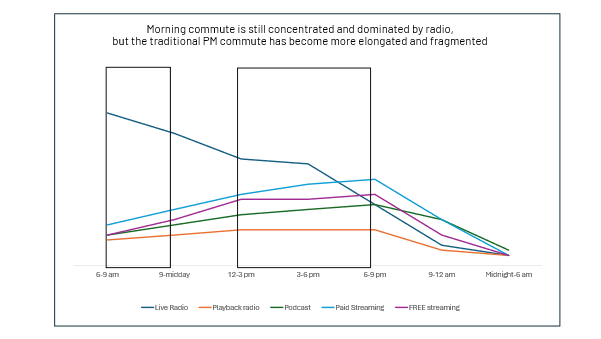
The new shape of hybrid working has been debated and researched regularly, but the listening data showed a marked difference in how we are commuting. While the morning commute is behaving similarly to pre-COVID behaviour, with the period between 6 am and 9 am being key for radio listenership, the afternoon commute has elongated.
2. My Choice
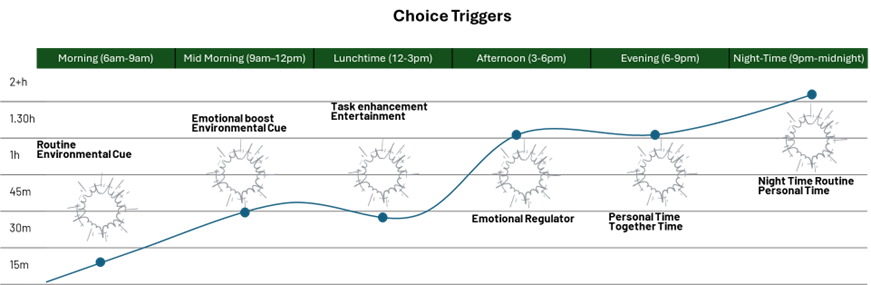
With more audio options available, listeners are actively choosing content more than ever before. 65% of people say they take time to choose what they listen to, compared to 55% in 2023. 70% of people choose what they listen to to match their routine. This compares to 58% in 2023. We learnt that their choice triggers evolve throughout the day, with the requirement to mood regulate increasing throughout the day.
3. Storytelling
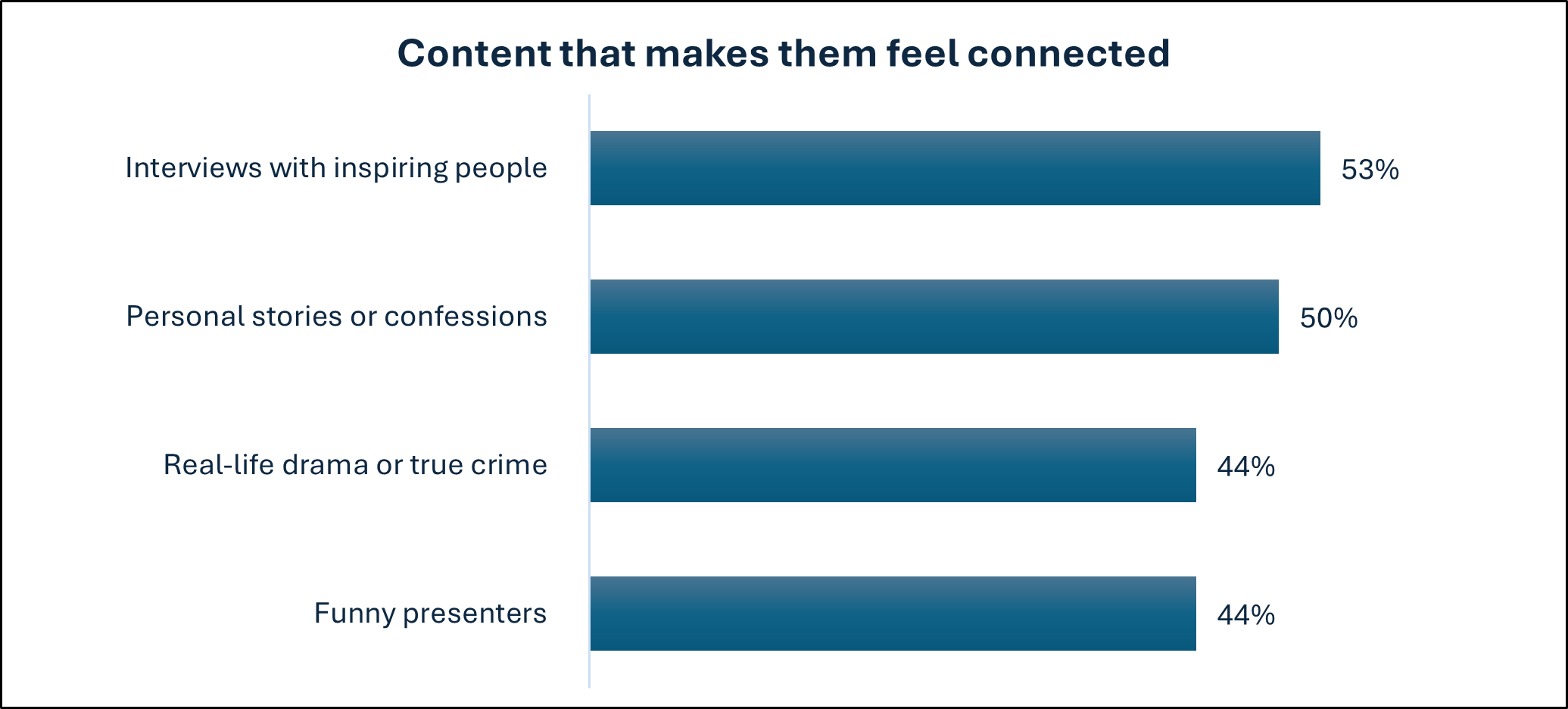
When we explored what content works to drive connection, it became apparent that storytelling is a critical component. Of the top 5 content typologies that Irish people feel connected to, storytelling features in four. Storytelling as a powerful tool for connection also delivers when it comes to advertising. Just over 1/3 of people claim that advertising connects with them when it is introduced with a personal story or anecdote.
4. Part of the home
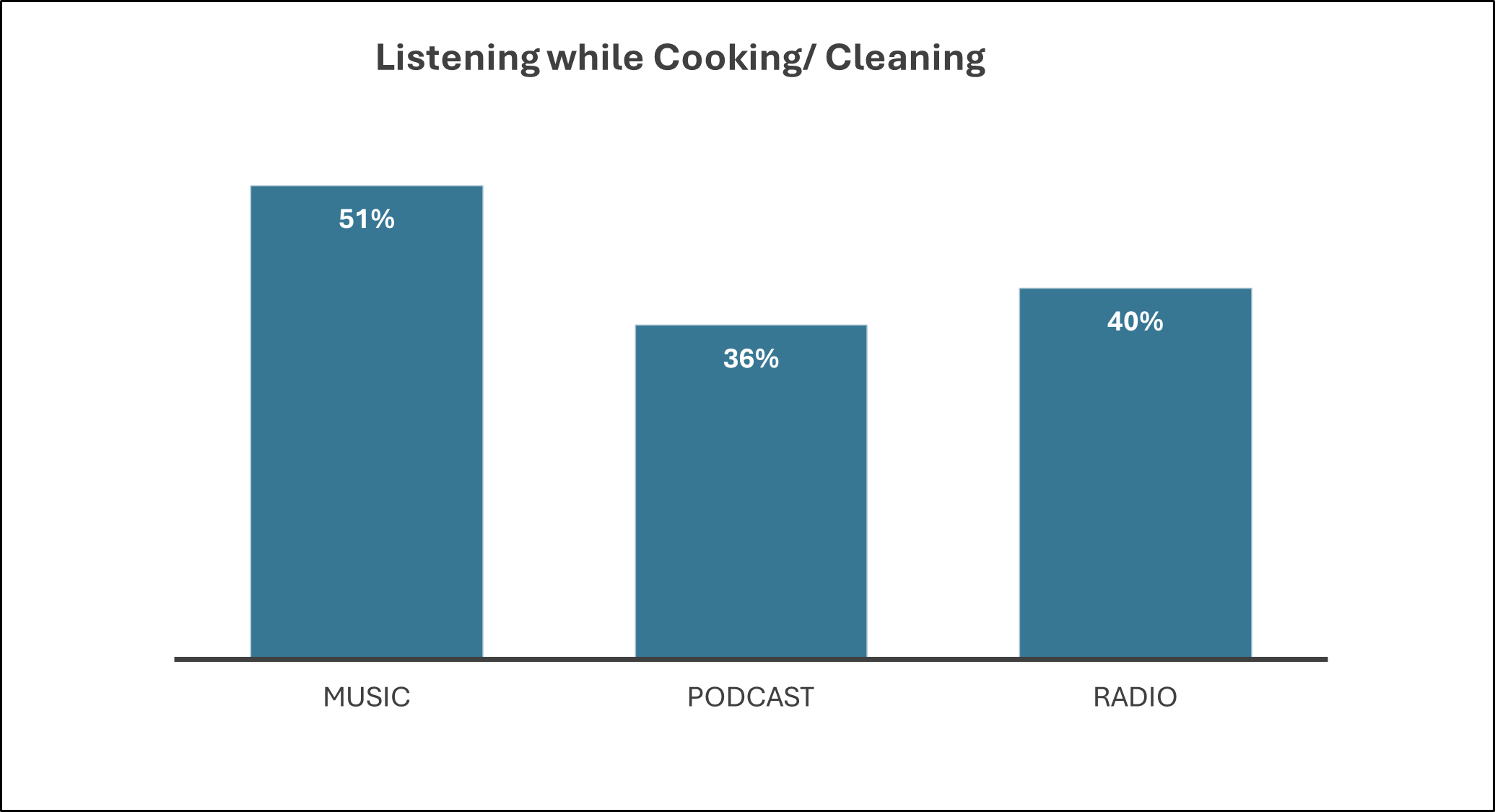
Looking back, the radio was a central and permanent feature in the home, but over the years it lost its role. Smart speakers have brought audio firmly back to its central place in the home.71% always put on audio while doing tasks such as cooking and cleaning. In contemporary media ecosystems, connection is not simply a social or emotional function; it is a primary driver of economic value. Media organisations, brands, content creators, and platforms all monetise connection because it translates directly into engagement, influence, and ultimately revenue.
As audio continues to evolve, understanding the triggers, contexts, and emotional foundations of listening behaviour gives marketers a powerful opportunity: not just to reach audiences, but to connect with them truly. Sound Affects 4 provides a roadmap for doing just that. A recording of the presentation is available to watch here, and you can download the full slide deck here.
Contact for more information
Zsofi Toth, Research & Insights Director, dentsu
Dael Wood, Strategic Consulting Director, dentsu.
Brian McCarthy, Group Commercial and Operations Director, ONIC

