

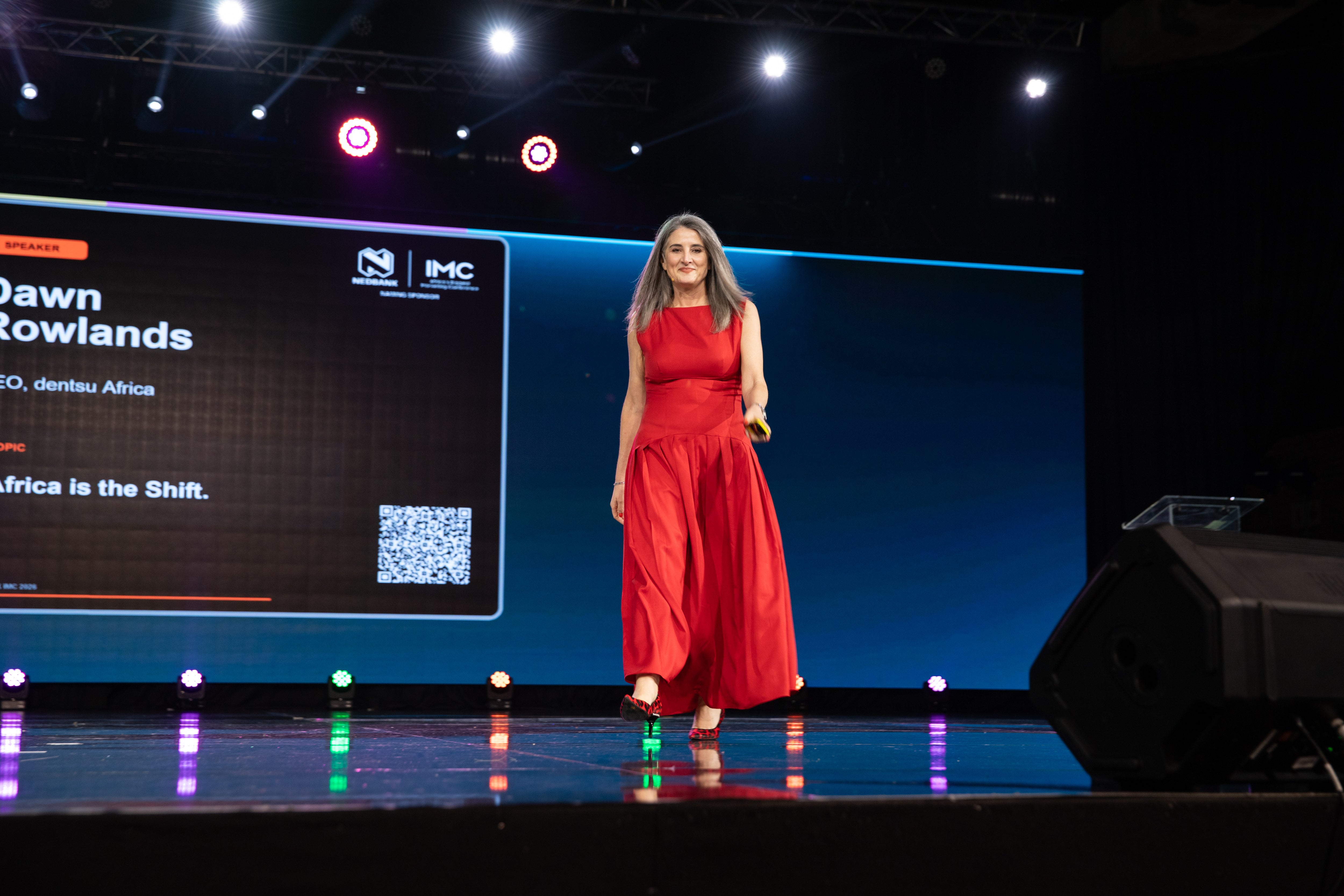
For decades, Africa has been described through a single word. Potential.
The youngest population in the world. The fastest growing consumer base. The untapped market. The next frontier.
Potential has become Africa's most persistent narrative. It may also be its most dangerous. Potential is not a strategy. Potential is what we call a promise that has yet to become measurable progress. The longer Africa is defined by what it could become rather than what it has built, the greater the risk that investors, innovators and global markets begin to question whether delivery will ever match ambition.
The next five years will determine whether Africa becomes a creator of technology, intellectual property and innovation, or remains a consumer of a future designed elsewhere.
Globally, artificial intelligence, automation, data, digital commerce, clean technology and creator platforms are reshaping economies. These are no longer emerging industries. They are becoming the foundation of competitiveness itself.
The countries that own talent, data, intellectual property and platforms will create disproportionate economic value. Those that do not will increasingly depend on technologies, systems and business models created elsewhere.
Africa has everything it needs to compete. The question is whether we have the ambition to lead.
The Hard Truth
Africa will not become a global innovation leader simply by producing more startups. Startups matter. They are an important expression of entrepreneurial energy. But innovation leadership is not measured by the number of businesses launched. It is measured by the strength of the ecosystem that enables those businesses to scale, compete and endure.
Innovation leadership requires world class talent, research capability, modern infrastructure, commercialisation pathways, risk capital, supportive regulation, valuable data assets and markets large enough to reward scale. Most importantly, it requires ownership.
Who owns the patents? Who owns the platforms? Who owns the algorithms? Who owns the intellectual property that others license, buy and build upon? These are the metrics that separate innovation economies from consumption economies.
Too often our benchmark for success is participation rather than leadership.
We celebrate market entry more than market creation. We celebrate funding rounds more than intellectual property. We celebrate adoption more than invention. We celebrate joining global platforms rather than building them.
That mindset must change. The next chapter demands not African versions of global companies, but global companies built in Africa.
Reclaiming Ambition
Perhaps the greatest risk facing Africa is not a lack of potential. It is a lack of ambition at the scale required to compete globally.
Fifty years ago, African nations pursued space programmes, scientific research initiatives and infrastructure ambitions that reflected confidence in their place in the world. Today, too much of the conversation focuses on catching up rather than leading.
The question is not whether Africa can compete globally. The question is whether we are willing to set goals large enough to require it. The future will not be shaped by those waiting for opportunities to arrive. It will be shaped by those bold enough to create them.
The Shift That Matters
The transformation required over the next five years is not incremental. It is structural.
Africa must move:
- from consumer of technology to creator of technology.
- from importer of intellectual property to exporter of intellectual property.
- from fragmented markets to connected innovation ecosystems.
- from low-cost talent to world class talent.
- from resource-based economies to knowledge-based economies. This is the shift that matters. Not how quickly we adapt to the future. How quickly we start creating it.
Five Levers of Innovation Leadership
levers will determine whether Africa leads or follows in the next decade:
Talent. Data. Scale. Capital. Speed.
Each matters independently. Together, they create the flywheel of a modern innovation economy.
1. Build the World's Largest AI Ready Talent Base
Africa's demographic advantage is often treated as destiny. It is not. A young population only becomes an economic advantage when it is educated, connected, skilled and equipped for the industries that will shape future growth.
The ambition should be bold and unapologetic. Africa should aim to become the world's largest source of AI ready, digitally fluent talent. Not thousands. Millions.
That means AI literacy in schools, coding and data science at scale, industry aligned curricula, university partnerships, vocational programmes designed for future labour markets and continuous reskilling for those already participating in the economy.
The objective is not to create a narrow elite of technologists. It is to build a generation capable of using, adapting, commercialising and creating technology for African realities and global markets.
Africa should also resist positioning itself as the world's most affordable talent pool. Competing on cost alone undervalues capability and traps economies in a race to the bottom. The goal is not to become the cheapest source of talent. The goal is to become the most respected.
2. Create One African Digital Market
Innovation scales when markets scale. One of Africa's most persistent barriers remains fragmentation. Different regulations. Different payment systems. Different identity frameworks. Different compliance requirements.
A company that succeeds in one African market should not have to rebuild itself from the ground up to compete in the next. Fragmentation imposes direct economic costs. Capital moves slower. Innovation scales slower. Consumers pay more. Businesses carry unnecessary complexity.
The long-term success of the African Continental Free Trade Area will ultimately be measured by how effectively Africa creates connected digital infrastructure, interoperable payments, harmonised frameworks and easier movement of innovation, talent and investment.
Africa cannot compete globally as fifty markets. It must increasingly compete as one.
3. Fund Invention, Not Consumption
Africa does not simply have a capital challenge. It has an allocation challenge. Too much capital fuels consumption. Too little fuels invention.
The next few years require stronger innovation funds, deeper venture ecosystems, university commercialisation programmes, research investment and patient capital capable of supporting breakthrough innovation.
The objective should not be to build local versions of global businesses. The objective should be to create globally competitive businesses born from African insight, African ingenuity and African problem solving.
The world's most valuable companies were not built by copying others. They were built by creating something new.
4. Build Digital Sovereignty Through Data and AI
Much of the conversation around artificial intelligence focuses on technology. The competitive advantage lies elsewhere. Data. Context. Understanding people.
Africa generates extraordinary volumes of behavioural, commercial and cultural data every day across financial services, telecommunications, retail, mobility, healthcare, agriculture and commerce.
The strategic question is not whether Africa produces data. The strategic question is whether Africa captures value from it. As AI becomes embedded across economies, countries that do not own their data ecosystems, digital identity frameworks and intelligence infrastructure risk becoming digitally dependent on others.
Digital sovereignty is no longer a technology discussion. It is an economic one. Consumer intelligence will become one of the defining assets of the next decade.
The organisations that understand people better will innovate faster. Those that understand them first will build enduring competitive advantages. In an AI economy, understanding consumers becomes just as important as understanding technology.
The future belongs not to those who collect the most data. It belongs to those who create the most value from it. Responsibly. Ethically. At scale.
5. Become the World's Fastest Innovation Testbed
Africa's greatest advantage may be speed. Historically, necessity has accelerated innovation across the continent. Mobile money transformed financial inclusion. Digital banking expanded access. Off grid energy created alternatives. Telemedicine extended healthcare reach. What others viewed as constraints often became catalysts.
The next opportunity is even larger. Africa can become the world's most effective environment for testing and scaling emerging technologies. Artificial intelligence. Climate technology. Health technology. Financial technology. Education technology. Advanced mobility solutions.
Speed today is not simply about regulatory agility. It is about decision velocity. The organisations that win will not necessarily be those with the most resources. They will be those capable of moving from insight to action faster than competitors. Fail faster. Learn faster. Scale faster. That is how enduring innovation ecosystems are built.
The Infrastructure Nobody Talks About
When people discuss innovation infrastructure they typically focus on roads, energy, broadband and cloud computing. All matter. But another layer of infrastructure is becoming just as important:
- Consumer intelligence
- Identity systems
- Decision platforms
- Trusted data ecosystems
- The ability to understand people
- The ability to act on signals quickly.
These capabilities will increasingly separate leaders from followers. The organisations that can convert signals into intelligence, intelligence into decisions and decisions into growth will build lasting advantages. The future innovation economy will belong to those who know more, learn faster and execute first.
A Five-Year Roadmap
Year One: Build the Foundations
Invest in digital skills, AI literacy, research incentives, innovation funding and policy alignment.
Year Two: Connect the Ecosystem
Expand broadband infrastructure, strengthen cloud capabilities, deploy digital identity systems, enable interoperable payments and establish regional innovation hubs.
Year Three: Create African Champions
Accelerate commercialisation, support African AI platforms, deepen venture funding and create globally ambitious businesses capable of scaling across markets.
Year four: Export innovation
Expand international partnerships, launch global pilots, attract research investment and position African markets as proving grounds for emerging technologies.
Year five: Establish leadership
Build globally recognised African brands, export intellectual property, strengthen capital inflows and create technology platforms built in Africa and used around the world.
The Narrative Shift
The most important change required over the next five years is not technological. It is psychological. Africa must move beyond the mindset of waiting. Not waiting for capital. Not waiting for validation. Not waiting for permission. Not waiting to be discovered.
There is an uncomfortable truth leaders must confront: No one is coming to build Africa's future for Africa. Neither governments, multinational corporations, investors nor technology companies can substitute for local ambition and local execution.
The responsibility for building globally competitive African innovation ecosystems rests with Africa itself.
The world's most successful economies were not built by waiting for opportunity. They were built by creating it.
Africa's opportunity is not merely to participate in the next wave of innovation. It is to lead parts of it. The talent exists. The ideas exist. The demand exists.
The building blocks already exist. The future is being built now. The only question is whether Africa intends to build it or buy it.
Africa is not the next frontier. Africa is the next engine. Not emerging. Not catching up. Not waiting. Building. Built in Africa. Powered by Africans. Ready for the world.

