
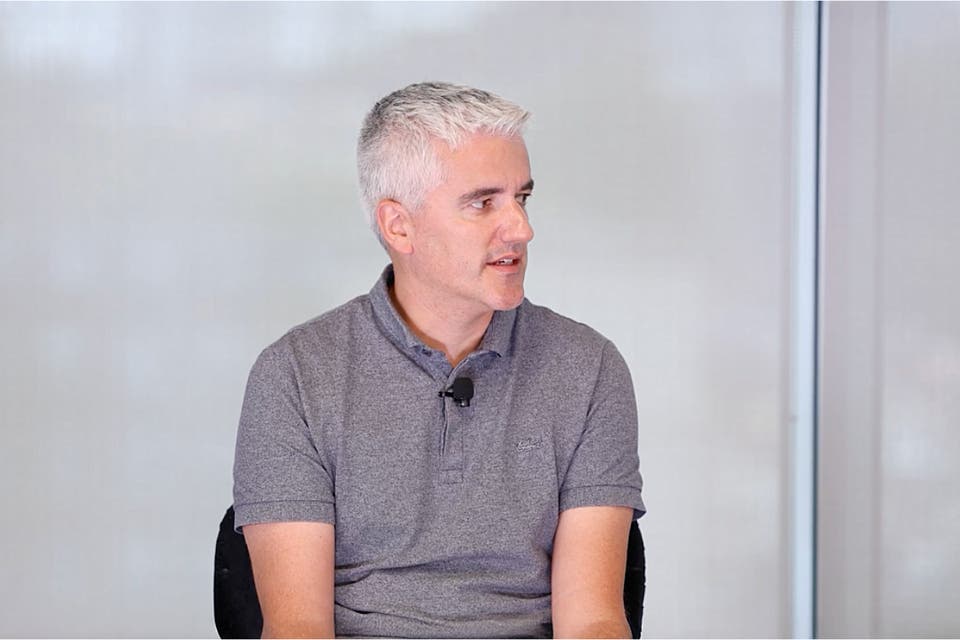
Jean-Guillaume Paumier, Head of Future Lab & Digital Lead at iProspect, on moving beyond moment marketing to orchestrated culture strategies that actually grow brands — and why culture marketing today needs less luck and more engineering in an age defined by fandoms, algorithms, and AI.
Q: Why should marketers read the Culture Accelerated report immediately?
JG: Culture marketing is probably the second most said thing in our industry after AI. But the whole point of this report is to challenge us to rethink how we treat culture marketing — to move it from a stroke of luck to an engineered success.
The shape of culture is changing. More speed, more scale, more fandoms, more AI-generated content, more convergence — but also more noise and clutter. The old school rules of culture marketing completely do not apply in a world of TikTok or Netflix or Amazon.
From an Ipsos perspective, we want to bring hyper-specialism at a platform level so we can pinpoint the signals that get you to where you need to play in culture. We're leaning on our luxury expertise to understand how you do a proper cultural playbook. And we have that native culture bunch of people through the sports and entertainment network with fresh talents that clients don't really tap into.
We want to help guide brands to ask the right questions, to understand where to play and how to play. So it's a bit of a provocation, a bit of a manifesto, and hopefully very useful pointers to do culture marketing in a way that's relevant for this new era.
Q: So it's about bringing rationality and frameworks into culture, which is super irrational and emotional?
JG: One hundred percent. It's a sense of balance. Too many times the pendulum was swinging completely the other way — it was very creative instinct-led. That still has a massive place, we're not discrediting that at all, but we need more data, more intelligence that fuels that creativity. Then you turn to new people, new native creators, platforms, and partners to create something that is ultimately going to cut through and make you grow.
Q: Do you think brands today overestimate or underestimate their cultural relevance?
JG: It requires brands to have such a different mindset. You have to pivot from "It's all about me" to "Actually, there are some conversations over here which I can really positively affect because I've got something to say." That is usually a big cultural change for most companies — to have the confidence to lose a little bit of control.
I think a lot of it is finding the right balance between on-brand and on-culture. If you're too much on brand, you're doing a monologue that potentially no one cares about. If you're too much on culture, you might get lucky, but most of the time it's perceived as jumping on a bandwagon — like all the brands jumping on Taylor Swift being engaged. Is that a long-term strategy? You have to know what you stand for, but then be humble enough to not make it about yourself.
Q: It sounds like human psychology — like, how would you behave when you enter a room full of strangers?
JG: Exactly. I use that room analogy a lot. It's like opening a door on a room of people passionate about a topic, you shout your message, then you close the door and have no idea what happened. It talks to commitment — to listen in the conversation, to maybe take it a different direction where you're not sure where it's going. It goes back to brands being brave, because some of the best culture partnerships are something that's not gone how a brand wanted, but they're able to pivot and react in a way that is super brave.
Q: What are three absolute non-negotiables for culture planning?
JG: First, cultural intelligence. As media partners, we can bring loads of signals — platform planning, whatever — to really tell you where you need to play in culture. Brands usually underestimate the role we can play in answering those important questions.
Second, lean into different people who can help create something more native. Brief somebody who's a specialist in influencer, gaming, or entertainment — not a traditional buy, because you'll get a traditional answer. Culture has different facets.
And the last piece is how do you pivot from cultural moments planning to make it orchestrated?
Q: Are there any brands doing this cultural marketing really well?
JG: 1664 Blanc is a great example of a brand going beyond the obvious spaces. It's a great beer with a strong identity rooted in French elegance. They decided that actually, it makes sense for the iconic blue bottle to not be in a football arena, but to be the beer that intersects with fashion. It's the only beer who probably is legitimate to do that, and they do it so well.
Hendrick's Gin is another great example. They come with a fantastic creative world where naturally it's very cultured. They've been able to really double down on what it means for culture and add to the conversation in a way that no other spirit's been able to do.
Q: Why do luxury brands allow themselves to take bolder creative risks?
JG: What's fascinating is that non-luxury brands are all in awe of that creative fuel that luxury brands instinctively have. But there's always a layer of company culture, of being brave. That's true within luxury, but also true of brands like Liquid Death — doing a collab with elf to make makeup and water, connected with that fun cultural vibe. Brands do look a lot to luxury to understand the codes, and that's what we're trying to distill.
Q: With luxury and aspirational shoppers, do you see their buying patterns becoming more distinct?
JG: I've seen luxury brands be at the forefront of culture-to-commerce convergence. Burberry did B Series — the first example of drop collections that was social-led, probably targeting a very aspirational specific audience.
That convergence is getting louder. Netflix, Amazon, TikTok — all these platforms are now culture and commerce one-click-away moments. We as individuals are allowed to be fans of one thing but shoppers of another. Luxury has shown the way around how you manage that convergence.
Q: In terms of metrics — ROI, engagement, awareness — what should marketers track to understand they've moved culture?
JG: It stems down to why are you doing this in the first place. You probably have a very clear brand growth ambition. So the answer is going to be very strong marketing and business KPIs. You need to make sure your brand is cutting through, people remember it, and that it's driving sales. It's about generating a conversation. Reach that doesn't create a conversation is like reach that is not seen.
But it's still hygiene of marketing. Why are you doing this? Is it shifting your needle? Because ultimately you're here to grow your brand.
There might be times when brands go into culture with different reasons — they want to attract a younger audience or there's a big seasonal moment. If you need to attract new audiences, it's about making sure all the different initiatives ladder up to that group of people getting that you are now cooler, in whatever metrics you need to shift.
On the other side, take a platform like Amazon. We're getting to the point where clients infiltrate a big seasonal moment through content. We had Birra Moretti doing a fantastic partnership, a documentary about Italy and the culture. That trickled down to sales data off the back of it.
Q: Looking to the future, what experiments are you watching that might impact other industries?
JG: Culture is a passion point. Culture is not something you think about, it's something you embrace, you immerse yourself in. It's the stuff you do on the weekend. The brands that are going to get it right are the brands who just always remember that this is about passion.
So brands like Yves Saint Laurent investing in long-form production — that's super interesting. I think everybody should look and see where that space goes.
The other end of the spectrum is letting loose a bit more control of your storytelling — native creators playing a bigger role, being quite playful. I would be interested to see at what point AI gets into the mix of that more native short-form stuff. We have lots of AI influencers already, but at what point is AI not something that's meant to trick you or create scale, but a fun, playful, transparent ingredient in your storytelling? That's a space I'd love to see for the short-form culture brands who win tomorrow.
Download the copy of the full Culture Accelerated: A Guide to Culture Marketing in the Algorithmic Era here. It is built by strategists and leaders across iProspect and dentsu, it delivers a bold new take on how to show up in culture with precision — especially in spaces like music, luxury, fashion, and fandom — where the stakes are high, but the rules are too often vague.

