
AI Media Effectiveness: Why Smarter Planning Drives Results
Published on:
Why More Data Hasn’t Improved Media Performance
The marketing industry faces a paradox. AI media effectiveness is no longer about collecting more data; it is about turning complexity into clarity, attention into impact, and planning into performance. Despite having more data, tools, and dashboards than ever before, campaign efficiency and media performance are declining. This is not an isolated issue. It signals a fundamental shift in how media performance is created and measured.
Artificial intelligence (AI) is often positioned as the ultimate solution to data overload, promising smarter decisions and better results. Yet AI media effectiveness does not come from adding more data or more technology.
More data does not equal better outcomes. The real value of AI lies in improving attention, planning, and performance. It simplifies complexity instead of amplifying it. When applied strategically, AI enables brands to move from reactive reporting to predictive media planning, decision-ready insights and media performance optimisation.
This article explores why traditional media strategies fail to deliver effectiveness and how AI can transform media planning, creativity, and performance for measurable impact.
The Surprising Insights Behind Declining Media Performance
1. The Data Paradox in AI marketing: Why More Tools Lead to Less Impact
Marketing teams are surrounded by dashboards, platforms, and performance metrics, yet decision quality continues to decline.
The problem is not a lack of data. It is an overreliance on:
- Fragmented tools
- Retrospective reporting
- KPIs that measure activity rather than impact
This leads to analysis paralysis instead of strategic clarity. AI changes this dynamic when used correctly. Instead of backward-looking analytics, predictive media planning shifts the focus toward what will work, not just what already happened.
AI-driven media effectiveness is built on three core principles:
- Smarter planning, forecasting ROI and scenario modelling before budgets are spent
- Sharper activation, real-time optimisation across channels and formats
- Stronger measurement, identifying hidden inefficiencies and diminishing returns
Used strategically, AI simplifies complexity and supports media performance optimisation across the full funnel.
2. The Attention Illusion: 84 Minutes of Ads, but Only 9 Minutes of Real Attention
According to Influencing to Impact Report, consumers are exposed to around 84 minutes of advertising per day, but only 9 minutes receive real attention.
Traditional metrics like viewability only confirm whether an ad appeared on screen, not whether it was noticed or remembered. This is where attention‑based marketing becomes decisive. Attention metrics, however, measure whether an ad is genuinely seen and for how long.
Attention metrics outperform legacy KPIs:
- 3× better at predicting brand outcomes than viewability
- +180% correlation with ROI
Brands that optimise for attention rather than impressions gain a clear competitive advantage.
3. Why AI in Marketing is used for Efficiency, Not Strategy
AI adoption in marketing is widespread, but often superficial. According to Statista, 56% of marketing professionals globally already use AI, yet most applications remain tactical rather than strategic.
Common AI use cases include:
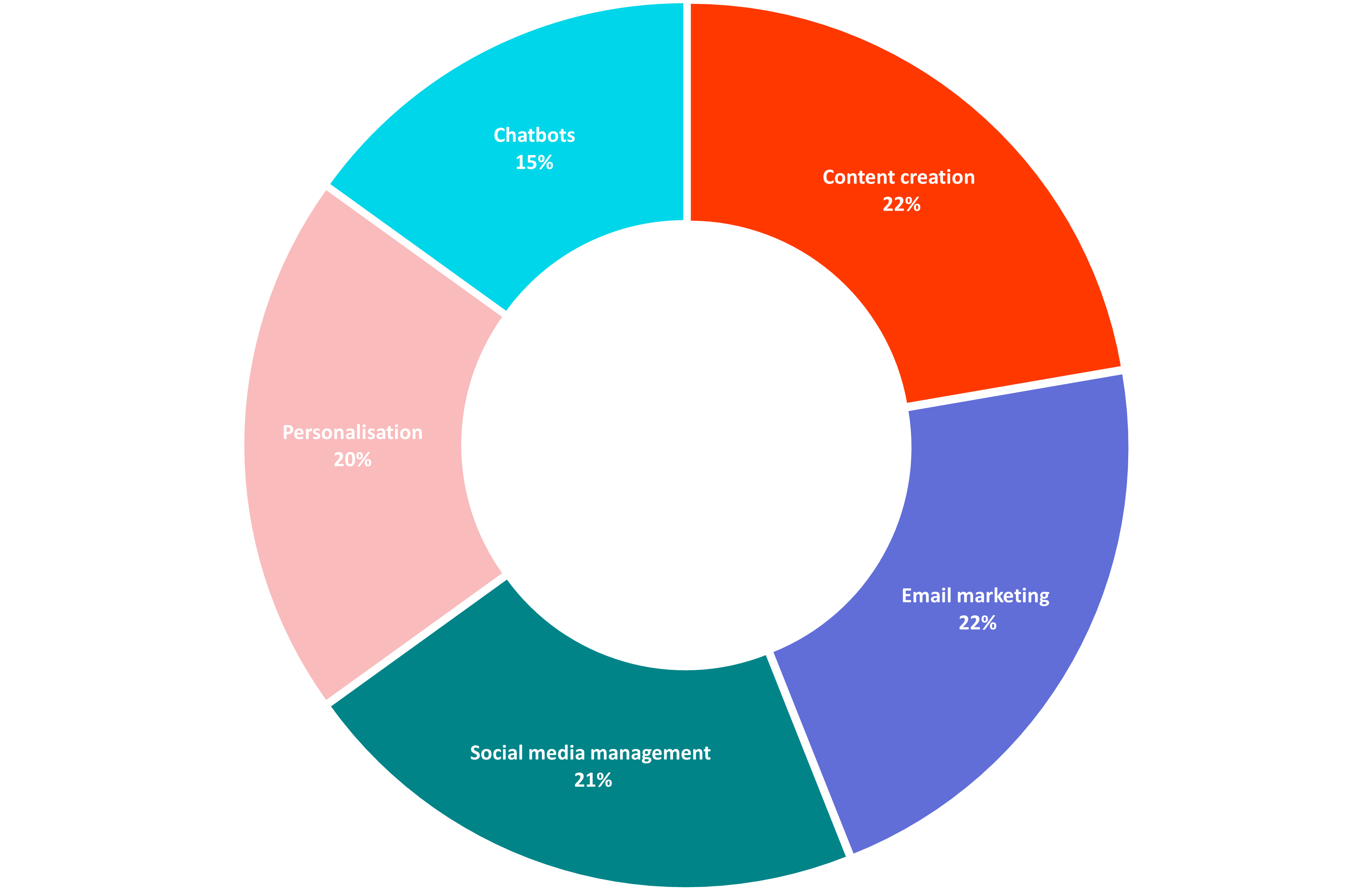
Only 22% use AI to predict consumer behaviour or inform audience segmentation.
As a result, marketing AI insights are frequently limited to automation and speed. Output increases, but decision quality does not.
True AI in marketing strategy means:
- Anticipating behaviour instead of reacting to clicks
- Informing planning, not just execution
- Driving effectiveness, not only efficiency
Without this shift, AI risks amplifying noise rather than delivering clarity.
4. Data-driven Creativity: How AI improves Media Performance
AI is not a replacement for creativity. It is a catalyst.
By automating repetitive tasks and translating complex datasets into actionable insights, AI creates space for creative teams to focus on originality, relevance, and impact.
Across e-commerce and performance-driven environments, brands using AI-powered optimisation and recommendation tools consistently report significant improvements in conversion rates and campaign performance within short timeframes.
The future of marketing lies in the combination of human intuition and data-driven creativity, enabled by machine intelligence. Brands that fail to embrace this shift risk losing relevance, attention, and effectiveness.
From Data Overload to AI Media Effectiveness
Marketing is at a turning point. The true value of AI does not lie in automating existing processes, but in enabling a strategic shift toward effectiveness.
AI media effectiveness means moving:
- From data overload to predictive, decision-ready insights
- From impressions to genuine, measurable attention
- From execution-driven workflows to strategic media performance optimisation
The key question is no longer whether AI should be used, but how it is deployed to ensure brands are not just visible, but relevant, meaningful, and understood.
Go Deeper: Accelerate Media Performance with AI
For a deeper, data-driven exploration, download our English-language whitepaper Accelerating Media Performance with AI.
Discover how AI can transform media performance in a strategic, predictive, and measurable way.