

Written by Jamie Mounsey, Commerce Manager
Most brands think they’re advanced at retail media; their measurement says otherwise.
Retail media is often positioned as one of the most measurable channels in modern marketing, but that perception doesn’t quite match reality.
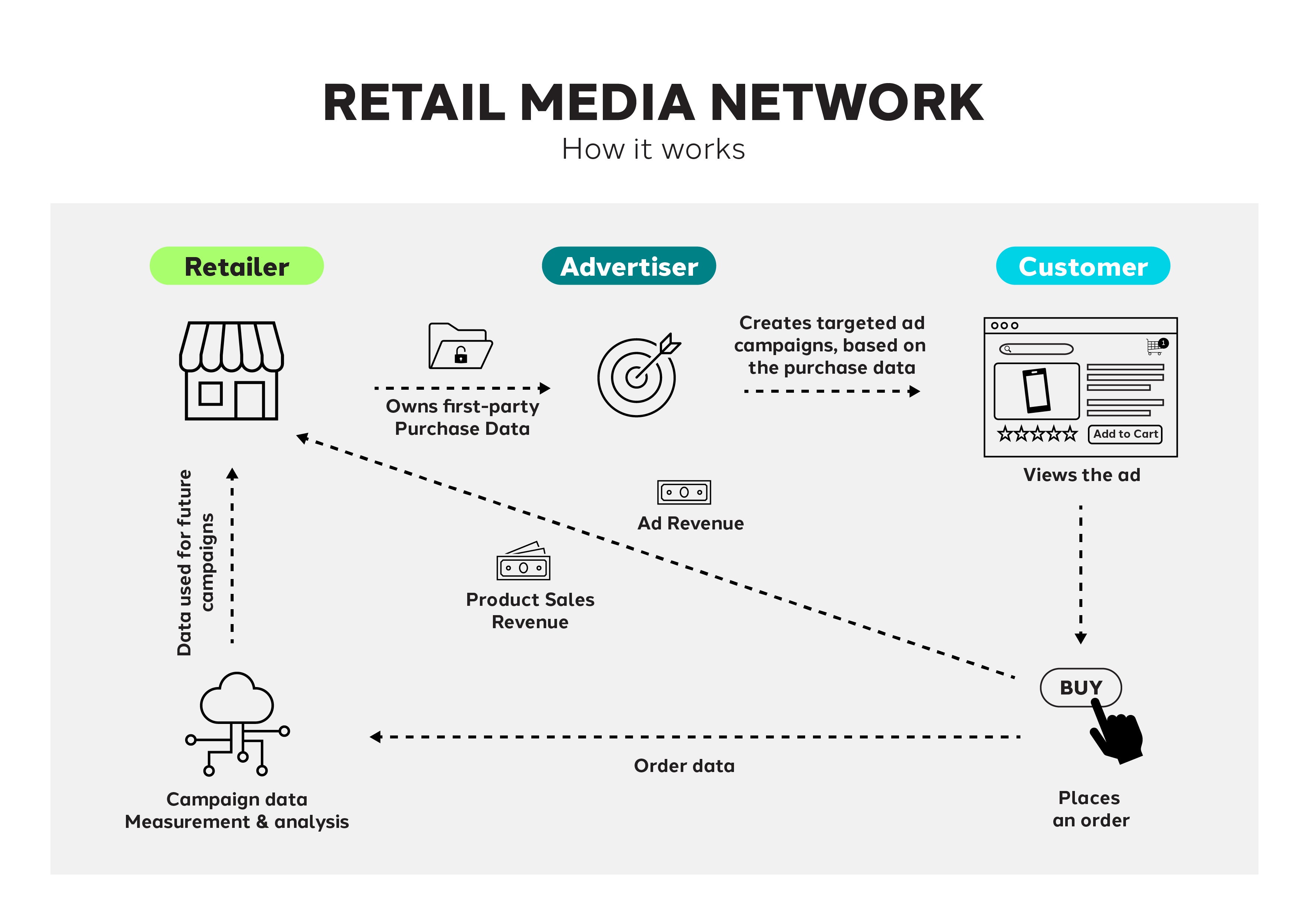
Despite rapid investment and growing sophistication in tools and platforms, most brands are still operating with fragmented measurement frameworks, inconsistent attribution models, and limited ability to truly prove value. The result? A channel full of promise, but still lacking the trust and standardisation needed to unlock long-term budget growth.
The measurement challenge: one channel, multiple truths
Retail media isn’t measured through a single lens. Instead, it operates across three fundamentally different environments:
- On-site, where retailers control exposure, identity, and transaction data
- Off-site, where campaigns run across platforms like Meta, TikTok, and connected TV using retailer audiences
- In-store, where physical and digital media intersect
Each of these environments has its own attribution logic, its own data limitations, and its own way of defining success.
That means a single campaign can produce three different versions of “performance” – none of them directly comparable.
On-site: the closest we get to attribution accuracy
On-site retail media measurement is often considered the gold standard because it enables deterministic, closed-loop attribution. Retailers can directly connect ad exposure to transactions using their own first-party commerce data, providing a level of visibility that is difficult to achieve elsewhere.
However, accurate attribution should not be confused with incrementality.
Many retailers apply predefined attribution windows to activations to ensure consistency in reporting. For example, a display campaign may use a two-week post-exposure attribution window:
- If a shopper sees an ad, they have 14 days for a purchase to be attributed.
- If they purchase outside that window, the sale is not counted against the campaign.
This approach helps create a consistent framework for measurement and reduces the risk of overstating performance through overly generous attribution periods.
On-site retail media faces a different challenge: the closer an advertisement is to the point of purchase, the harder it becomes to determine whether the media created demand or simply captured demand that already existed.
For example, a shopper actively browsing a category or searching for a product on the internet may already have strong purchase intent before encountering a sponsored placement. While the retailer can accurately attribute the resulting sale to media exposure, it is more difficult to determine whether the advertisement genuinely changed behaviour, influenced brand selection, increased basket value, or accelerated the purchase decision. In many cases, the consumer may have converted regardless of the media exposure.
This is the fundamental difference between attribution and incrementality. Attribution measures whether a sale occurred after an advert was seen; incrementality measures whether the sale would have happened without the advert.
As a result, relying solely on attributed sales or ROAS (return on ad spend) can overstate the true impact of on-site media, particularly for lower-funnel formats that engage shoppers immediately before purchase. To address this, leading retailers and brands are increasingly incorporating incrementality measurement approaches to better understand the sales genuinely generated by media activity. These include:
- holdout testing
- control-versus-exposed audience analysis
- conversion lift studies
- new-to-brand measurement
Ultimately, on-site retail media remains the most accurate environment for connecting advertising exposure to transactions. However, the industry's focus is increasingly shifting beyond attribution towards understanding incremental impact, ensuring media investment is measured not only by the sales it touches, but by the sales it creates.
Off-site: where measurement starts to break down
The retail media measurement challenge becomes significantly greater once things move beyond retailer-owned environments and into platforms such as Meta, TikTok, Snapchat, and connected TV providers. These channels operate as closed ecosystems, often referred to as "walled gardens", where user-level data cannot be freely exported or shared. This creates technical limitations for retail media measurement, as retailers, brands, and agencies are typically unable to connect impression, engagement, and conversion data across platforms at an individual level. As a result, proving whether an audience exposed to off-site advertising directly contributed to sales becomes increasingly difficult, often requiring modelling, aggregated reporting, or probabilistic attribution rather than deterministic measurement.
Data clean rooms such as InfoSum have emerged to help address this challenge. They help by enabling multiple parties to match and analyse audience data in a privacy-safe environment without exposing underlying customer records. This allows retailers and brands to activate retailer audiences across channels such as ITVX, digital display, and other premium media environments while maintaining compliance with consumer privacy regulations. But, adoption is not straightforward. Clean room solutions introduce additional costs, technical integration requirements, data governance considerations, and operational complexity. This means they’re more accessible to larger retailers and advertisers with sufficient scale, while smaller businesses still need a solution.
There are also broader agency and organisational considerations. For example, InfoSum is owned by WPP, which can create hesitation among non-WPP agencies and some brands when evaluating data collaboration strategies. While the platform operates independently and with privacy controls in place, organisations may have concerns around data stewardship, governance, competitive sensitivities, and how audience assets are managed within an ecosystem owned by another agency holding company. These concerns can slow adoption, particularly where multiple agency partners are involved or where brands are seeking neutral infrastructure for audience collaboration. As a result, while clean rooms are increasingly viewed as a foundational component of retail media measurement and audience extension, the market is still evolving and there is no universally adopted solution across retailers, agencies, and media platforms.
In-store: the biggest untapped opportunity
In-store media is one of the fastest-growing areas, but also the least mature when it comes to measurement.
Most digital screen networks still rely on loop-based impressions rather than audience-based measurement, making it difficult to prove real impact.
Emerging technologies offer more advanced solutions, but they are not yet scaled across the market.
Still, there are clear signs of progress. For example, Meijer’s partnership with Pentaleap shows a shift toward more data-driven retail media ecosystems, where relevance and continuous testing drive better outcomes. These approaches enable faster experimentation and better measurement - but are not yet standard practice.
An aligned approach
Across all three touch points, a big question we have is: How do we move beyond ROAS as the primary KPI?
Retail media still relies heavily on short-term performance metrics like ROAS and CTR. While useful, they don’t capture full business impact.
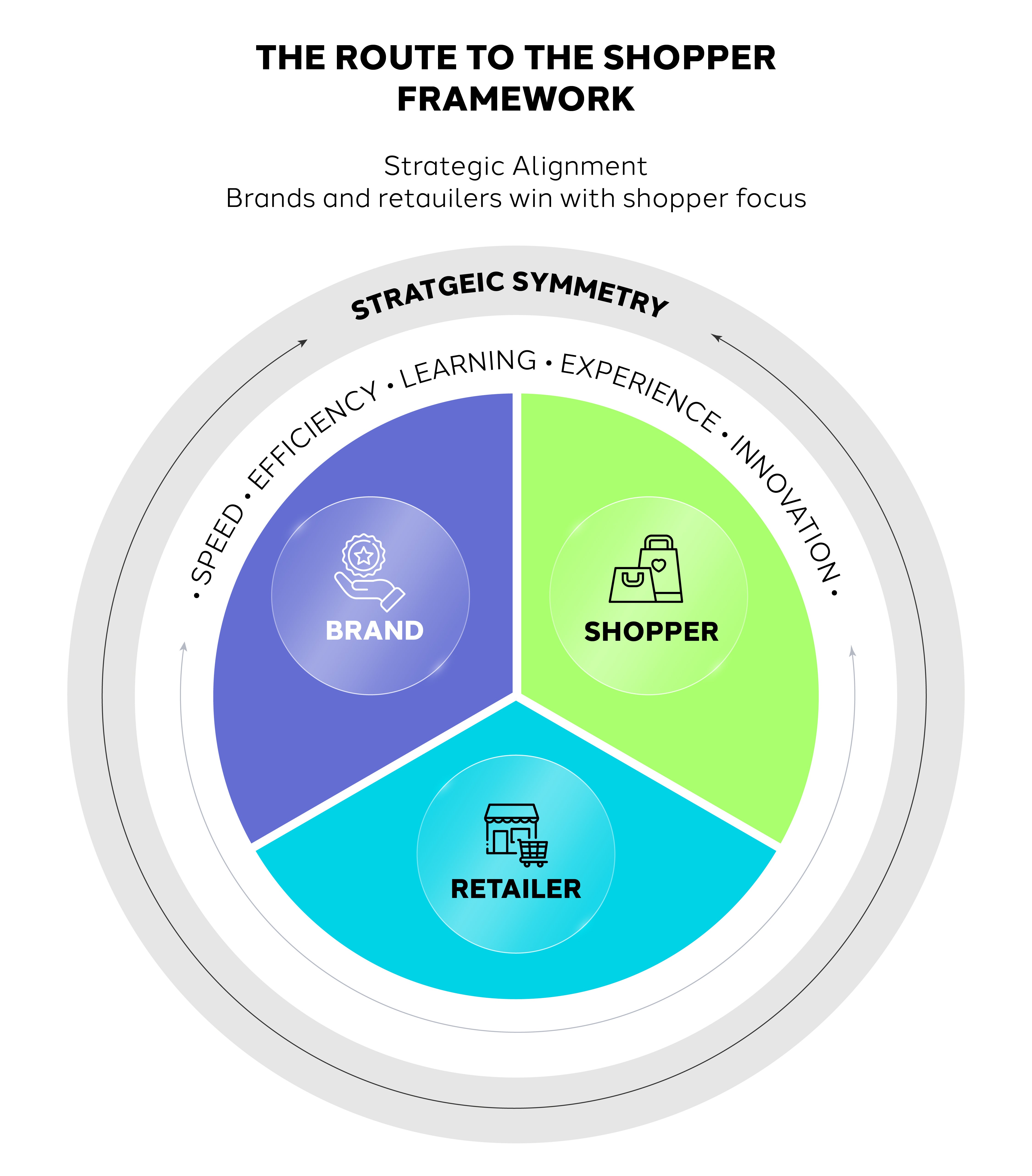
Brands also need to consider impact of the disconnect between shopper, ecommerce, and brand teams. While retail media sits at the intersection of all three, these functions typically operate with different objectives. Shopper teams focus on short-term conversion and ROAS, ecommerce teams prioritise trading performance and on-site optimisation, and brand teams aim to drive long-term awareness and growth.
Without alignment, this creates fragmented measurement frameworks where success is defined differently across the same campaign. The impact is significant: attribution models become skewed toward short-term outcomes, upper-funnel activity is undervalued, and cross-channel duplication goes largely unaddressed.
To overcome this, leading organisations are shifting toward unified planning and measurement, built around shared business objectives such as incrementality, customer acquisition, and category growth. This is often supported by clean room solutions like Infosum, which enable retailer and brand data to be matched in a privacy-safe way, creating a single, consistent view of audiences and performance across channels. When combined with structured test-and-learn frameworks, this approach allows teams to move beyond siloed metrics and toward a more holistic understanding of impact.
Watch: How to help disconnected teams achieve retail media harmony
Ultimately, true retail media maturity is not just about better measurement tools, but about aligning teams around a shared definition of value: ensuring that performance is evaluated consistently, and investment decisions are made with confidence.
What does this mean for retailers?
Best practice measurement should focus on:
- Incrementality testing
- Category growth
- Customer penetration
- Brand and sales uplift
- Closing the gap
Retail media sits closest to the point of purchase, but proximity doesn’t equal proof. Until measurement becomes consistent, transparent, and scalable across all environments, the industry will continue to face a credibility gap. And until that gap is closed, most brands will continue to overestimate just how advanced their retail media capabilities really are.
At dentsu, we help brands move from fragmented retail media activity to connected, measurable and commercially accountable retail media strategies. From measurement design and incrementality testing to clean room enablement, data collaboration, audience strategy and activation, we help brands understand where retail media can create the greatest value, and how to prove it.
If you are looking to strengthen your retail media measurement approach, improve confidence in investment decisions, or move beyond ROAS toward a clearer view of business impact, we would be happy to talk – please contact us at commercemedia@dentsu.com.

